Dark Spot Correcting Cream (Hydroquinone+Tretinoin)


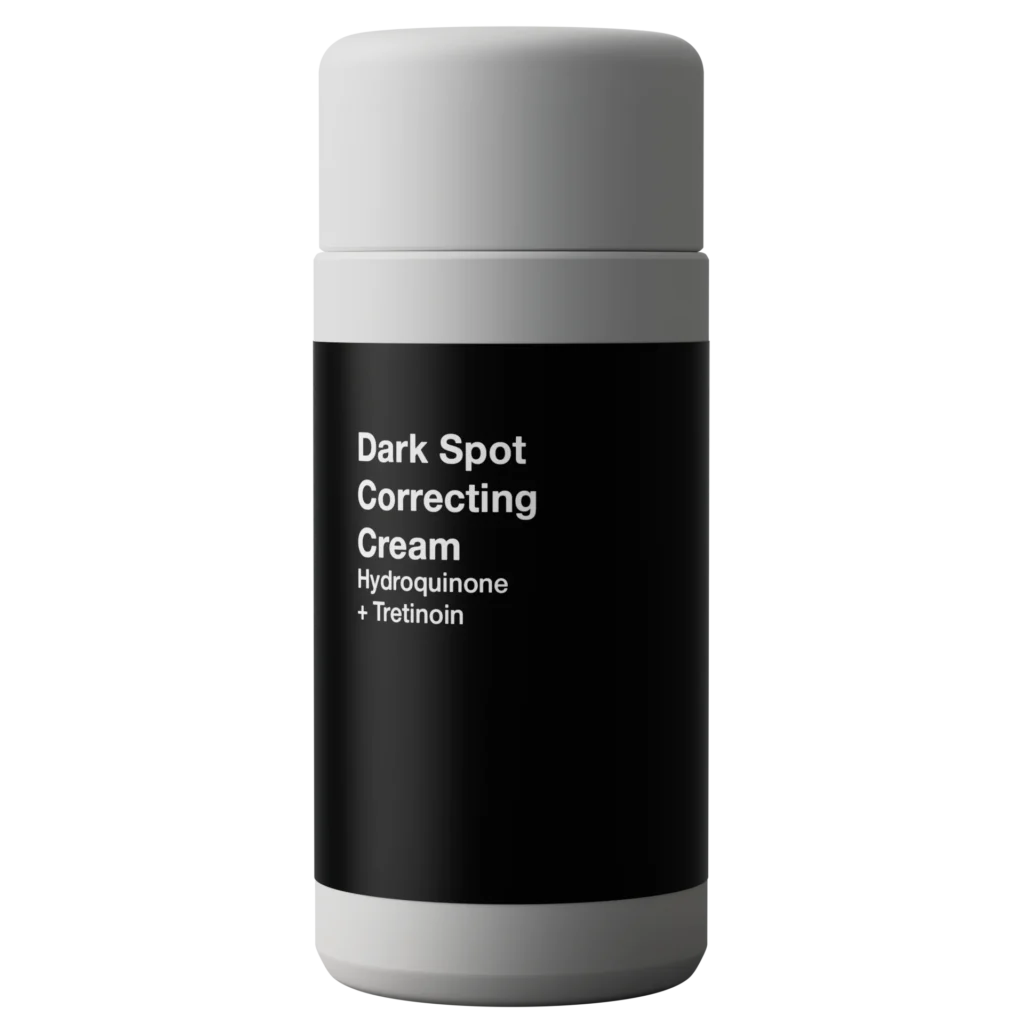
Dark Spot Correcting Cream (Hydroquinone+Tretinoin)
EvenTone Correcting Cream helps reduce the appearance of dark spots and uneven skin tone using a targeted blend of hydroquinone, tretinoin, azelaic acid, and hydrocortisone.
Correcting
Brightening
Refining

Medical Approval Required: A provider will review your intake immediately after checkout. A pre-authorisation hold is placed on your payment method at checkout; if you are not approved, the hold is released and no payment is taken.
Benefits
Highlights
- FrontCare is available in all 50 states except Alabama, Mississippi and Alaska.
Some treatments have additional state restrictions, which are shown on the product page.
Your provider consultation is done by written review or video with your provider. Some medications require a live video consultation with your provider rather than a written review. If that applies to you, you will be guided after checkout. - Prescription Dermatology Treatment – Topical application
- Supports the appearance of more even-looking skin tone
- No hidden membership, consultation, or shipping fees
- A licensed healthcare practitioner in your state will review your assessment and determine eligibility
Potential Benefits
Pigmentation Appearance Support
Hydroquinone and azelaic acid are commonly used in dermatology to support the appearance of uneven pigmentation.
Skin Renewal & Turnover Support
Tretinoin is used to support normal skin cell turnover, which may help improve overall skin texture and appearance over time.
Calming & Irritation Support
Hydrocortisone is included to help support skin comfort and reduce visible irritation during treatment.
Tone Uniformity Support
This combination formulation may be used to support a more even-looking complexion when used as directed under medical supervision.
Adjunct to Dermatologic Care Plans
EvenTone Correcting Cream may be incorporated into a broader provider-guided skincare regimen based on individual needs.
Subscription Plan
- Monthly Billing or Every 3 Months
Order Fulfillment
Disclaimer
This prescription skincare product is provided based on a licensed healthcare provider’s evaluation. These statements and the product have not been evaluated or approved by the Food and Drug Administration (FDA). This product is not intended to diagnose, treat, cure, or prevent any disease. Compounded or prescription topical formulations are not FDA-approved, and their safety and efficacy have not been independently verified by the FDA. This information is provided for educational purposes only and should not be considered medical advice. Always consult a licensed healthcare provider before starting any new treatment.

Expand the questions below
Frequently Asked Questions
What is EvenTone Correcting Cream?
EvenTone Correcting Cream is a prescription topical formulation containing hydroquinone, tretinoin, azelaic acid, and hydrocortisone. It is commonly used in dermatologic care to support the appearance of uneven skin tone under medical supervision.
Who may be considered for EvenTone Correcting Cream?
Use is determined by a licensed healthcare provider based on individual skin concerns, medical history, and clinical evaluation. It may be considered for adults seeking prescription-grade skincare for pigmentation-related concerns.
How is EvenTone Correcting Cream applied?
The cream is applied topically to the affected areas as directed by your healthcare provider. Application frequency and duration are individualized.
How is dosing determined?
Strength, application schedule, and treatment duration are determined by the prescribing provider based on skin response and tolerance.
Who should not use this product?
This product may not be appropriate for individuals who are pregnant, breastfeeding, have certain dermatologic conditions, or are sensitive to any of the ingredients. A full medical and skin history review is required prior to prescribing.
Can this be used with other skincare products?
All skincare products, medications, and supplements should be disclosed during intake. A healthcare provider can help determine appropriate combinations.
Should I inform my primary care provider?
Yes. Patients are encouraged to inform their primary care provider of any prescription skincare treatments to support coordinated and safe care.